If you are thinking, “There’s a skunk under my house,” act carefully. Sealing the hole or trying to scare it out can trigger spraying and leave you with a much bigger odor problem.
Skip mothballs and ammonia. They rarely work and can push the skunk deeper under the structure, especially if babies are present.
Derek Brownmiller, Waterloo Branch Operator of Bobcat Wildlife & Pest Management, says many homeowners assume it is a skunk without confirming what animal is actually underneath.
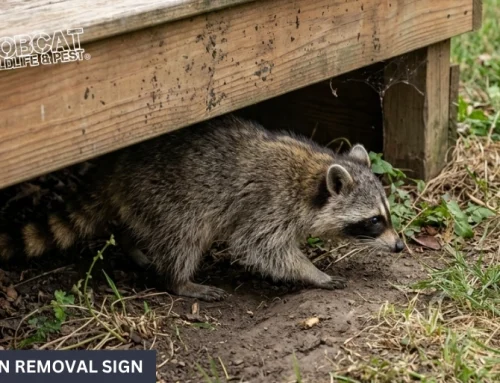
Skunks, raccoons, and groundhogs use similar openings, but each requires a different removal plan.
If you are searching for how to get rid of a skunk under house areas safely, the first step is a proper inspection followed by a removal strategy that prevents spraying and keeps the animal from coming back.
Below, we explain what to look for and what to do next.
How to Tell If There’s a Skunk Living Under Your House
If you suspect a skunk living under house foundations or crawlspaces, look for consistent patterns, not just one strong smell.
Watch for:
A strong odor concentrated near one section of the foundation
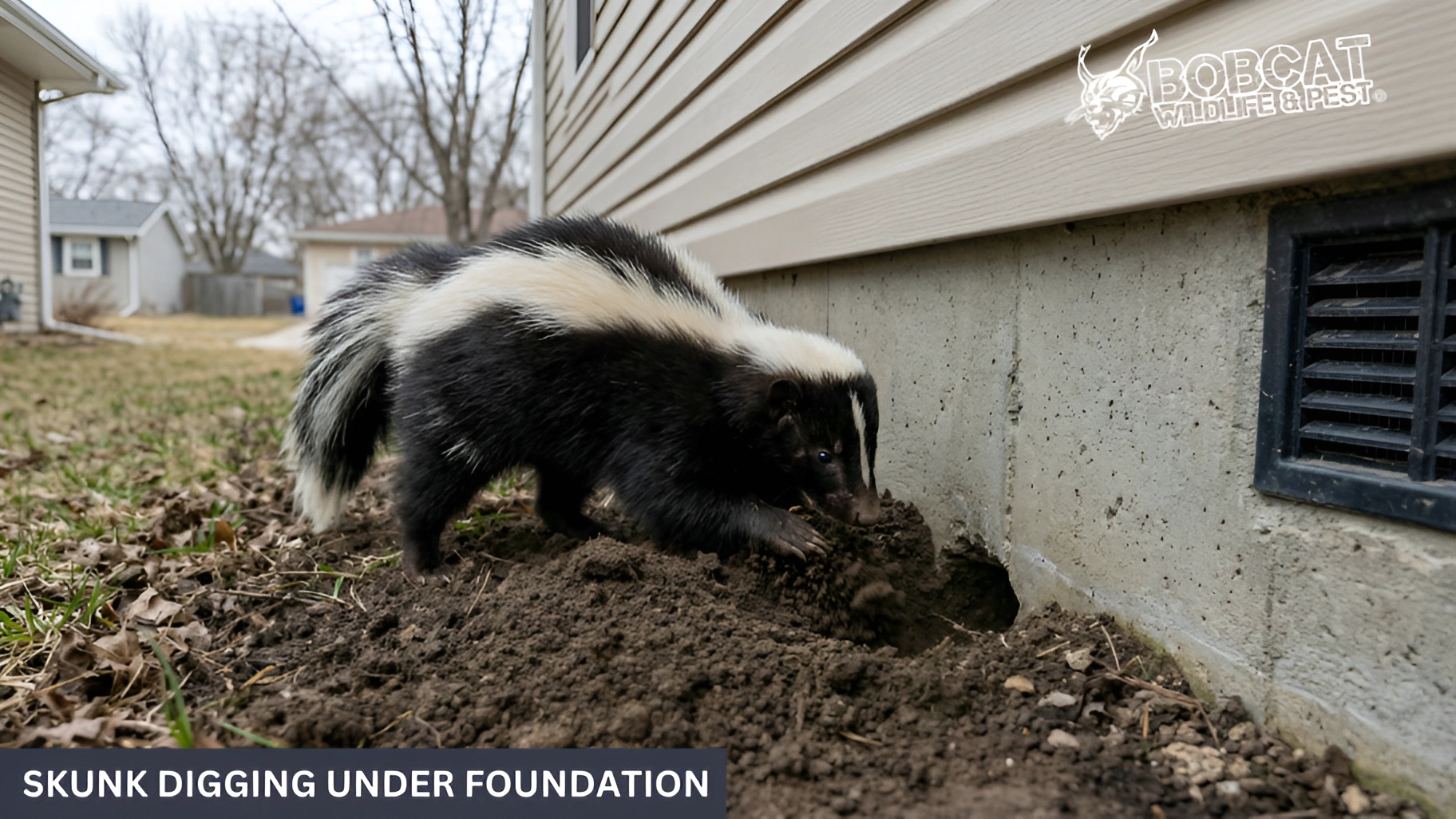
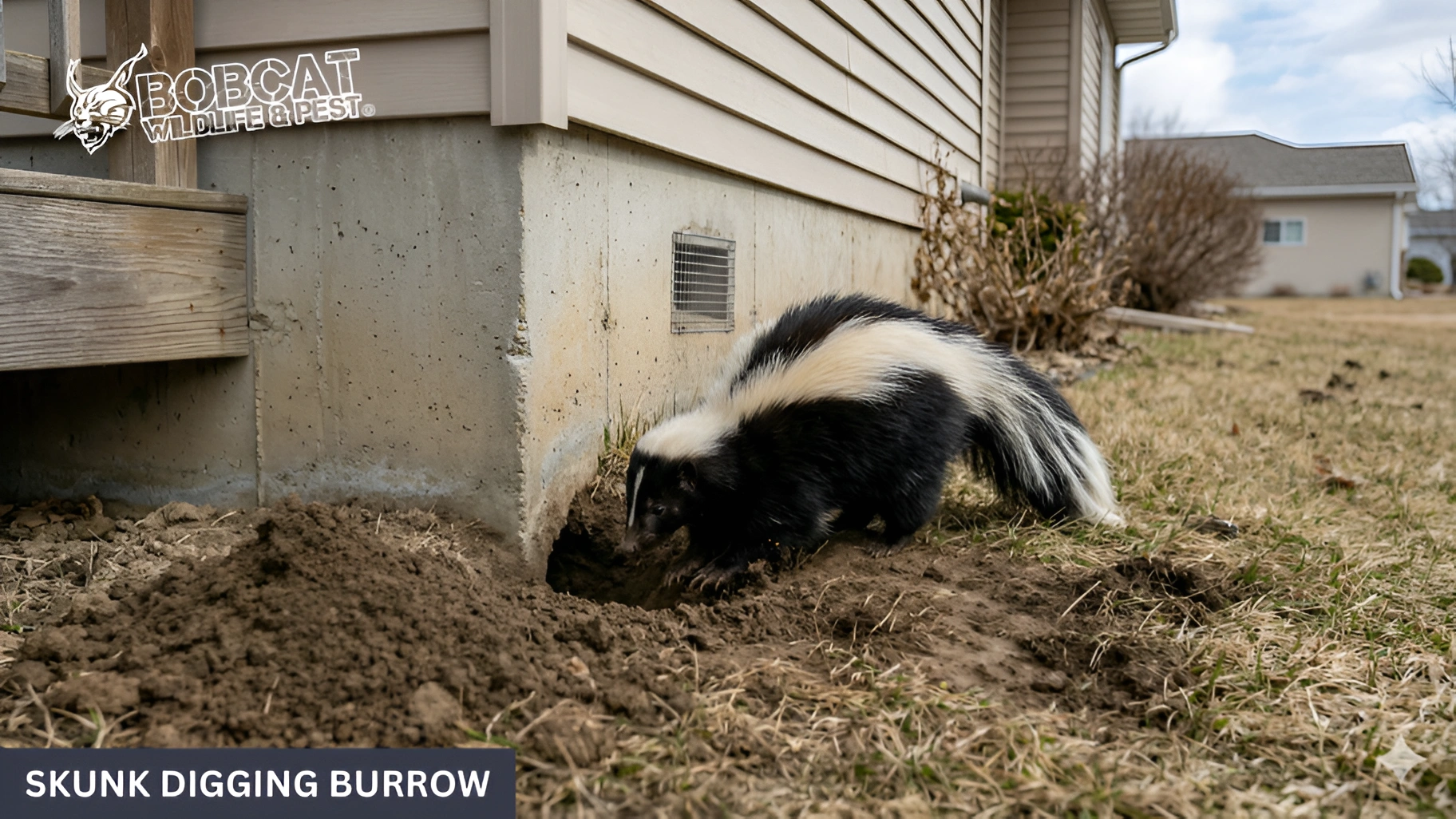
A low, rounded opening along the base of the home, usually about 3 to 4 inches tall
Fresh dirt pushed outward in a small mound near the entry point
Repeated shallow digging in the same patch of lawn
Movement or rustling sounds after dark from one consistent area
Skunks usually den tight against structures instead of nesting out in the open yard. They prefer areas with cover and limited light.
Derek says many Waterloo calls involve crawlspace openings, spaces under concrete steps, deck edges, and areas where soil has settled along the foundation.
If you are seeing multiple signs in one concentrated location, it often points to an active skunk den under house areas rather than a skunk just passing through.
Why This Is Happening in Waterloo Right Now
If this activity feels sudden, it usually is not random. It is seasonal.
In late winter and early spring, skunks shift from roaming patterns to den selection ahead of breeding season.
During this window, they stop moving from spot to spot and begin choosing protected, longer-term shelter sites.
In Waterloo, several conditions make homes especially appealing:
Freeze-thaw cycles that loosen soil along foundations
Snow melt that exposes small structural gaps
Crawlspaces and concrete steps that retain ground warmth
Yard grading that naturally slopes toward the home, creating protected edges
Derek notes that many homeowners expect wildlife problems in summer.
In Northeast Iowa, den selection often begins weeks before consistent warm weather arrives.
That is why it can seem like a skunk appeared overnight, even when daytime activity in the yard looks quiet.
Why a Skunk Under Your House Can Become a Bigger Problem
Now that you understand why denning happens this time of year, the real issue is what follows if a skunk under your house remains undisturbed.
A skunk does not just occupy space. Over time, secondary problems begin to develop:
Odor absorbing into insulation, subflooring, and porous materials, making the smell harder to remove
Air movement through crawlspaces carrying scent upward into vents and living areas
Fleas and parasites spreading beyond the den site
Gradual widening of entry points from repeated short digging
The presence of baby skunks, which makes removal more sensitive and time-dependent
Derek Brownmiller, notes that in many Waterloo homes, the most overlooked issue is contamination inside insulation layers.
Even after the skunk leaves, scent and bacteria can remain if the nesting area is not properly cleaned and sealed.
What starts as a quiet shelter space can slowly turn into an odor, sanitation, and structural concern if ignored for several weeks.
How to Get Rid of a Skunk Under Your House Safely
Once you have confirmed activity and understand the risks, the next step is practical. How do you remove a skunk under your house without making the situation worse?
When homeowners search for how to get rid of skunk under house areas safely, they often want a fast solution. The problem is that many quick fixes do not solve the root cause.
What Usually Doesn’t Work
These methods often delay real resolution:
Strong-smelling products placed near the opening. Skunks tolerate odor better than most people realize.
Closing the visible hole without confirming the den is empty.
Motion lights or vibration devices that the animal simply waits out.
Packing soil into the burrow without addressing the structural gap underneath.
These tactics may shift activity temporarily, but they rarely eliminate access.
A safe, lasting solution follows a controlled process:
A full inspection of the foundation and crawlspace perimeter
Confirmation of whether young are present, which changes removal timing
Use of humane trapping or monitored exit strategies based on behavior
Installation of one-way exclusion devices after activity stops
Permanent sealing and reinforcement of vulnerable areas
Derek Brownmiller, emphasizes that timing is critical. In many Waterloo cases, sealing even slightly too early can require reopening the structure later.
If you are still wondering how to get rid of skunk under house areas the right way, the difference is not stronger deterrents. It is controlled inspection, proper timing, and complete exclusion.
How to Get Rid of Skunks Under a Shed or Around Your House
If the den is not directly under your foundation, it is often under a shed, porch, or deck.
Many Waterloo homeowners search how to get rid of skunks under shed structures because these areas offer the same protection as a home, without being sealed as tightly.
Sheds and outbuildings create ideal den conditions because they often have:
Open soil edges with no buried barrier
Loose skirting or untreated gaps
Less foot traffic, which makes the space feel undisturbed
Low clearance that limits predator access
Unlike home foundations, most sheds in Waterloo do not have reinforced footings. That makes digging easier and repeat entry more common if the perimeter is not properly secured.
When people search how to get rid of skunks around your house, it often starts with shallow yard digging that leads back to one of these structures.
The professional approach remains consistent in principle: confirm activity, remove the animal safely, and secure the access point.
However, shed and deck areas typically require ground-level reinforcement such as buried exclusion barriers to prevent future denning.
Removing the skunk is only part of the solution. Securing the structure is what prevents it from happening again.
When to Call a Skunk Removal Professional in Waterloo
Sometimes the most important step is knowing when to stop trying to manage it yourself.
If you notice any of the following, it is time to involve a skunk removal professional in Waterloo:
- 1
The odor isn’t going away, even after several days
- 2
You suspect babies are present, which requires careful timing
- 3
Spray has reached the crawlspace or vents
- 4
DIY attempts haven’t changed the activity
- 5
Digging has widened gaps along the foundation or shed
At this stage, the issue usually goes beyond surface-level fixes. Waiting often means deeper odor absorption, more cleanup, and more structural reinforcement later.
Derek notes that once a den is established, wildlife rarely leaves on its own. Addressing it early typically means less disruption and a more controlled solution.
If you believe there is a skunk under your house or around a structure on your property in the Waterloo area, contacting a licensed professional ensures the animal is removed safely and the access point is secured so the problem does not return.
FAQs About Skunks Under Houses in Waterloo
The most reliable confirmation of a skunk under my house situation is repeated activity tied to one specific location.
Odor that consistently returns near a crawlspace, deck edge, or foundation corner usually indicates den use rather than a passing animal. Skunks also create smooth, defined entry points that stay active over multiple nights.
A professional inspection often includes checking for fresh soil disturbance, compressed insulation near vents, and signs of regular entry and exit patterns.
Identifying the exact species matters because groundhogs, raccoons, and skunks use similar openings but behave differently once inside.
Skunks are primarily active after dark and avoid open daylight exposure.
If you smell skunk repeatedly but never see one, it often means the animal is using a sheltered den site rather than roaming the yard.
Odor that lingers near one foundation section, especially after dusk, is more consistent with a skunk living under house structures.
Wind can carry scent across properties, so location consistency is the key factor.
Yes, but their sounds are subtle. Unlike raccoons, skunks move slowly and quietly. Homeowners may hear light scratching, slow shuffling, or short digging movements after sunset.
If babies are present, you may hear faint squeaking or movement deeper in the crawlspace. These sounds usually repeat in the same timeframe each night.
A skunk burrow is typically low and rounded, about three to four inches high and slightly wider than tall. The soil is pushed outward in a neat mound directly outside the hole.
Skunks prefer to tunnel just enough to gain access beneath concrete edges, steps, or siding. They rarely create wide excavations unless they are expanding an existing weak point.
If the space remains undisturbed and secure, a skunk living under house areas may stay for several weeks.
During breeding season, the den can remain active until young are old enough to move independently.
Skunks choose den sites based on safety and shelter. Once those conditions are met, they do not relocate unless forced by environmental changes or controlled exclusion.
Skunks generally avoid confrontation, but they will protect themselves if they feel trapped or threatened.
The primary risk is spraying, which can occur if pets approach the den or if the animal feels trapped.
There is also potential exposure to parasites or disease, particularly if pets dig near the entry point.
Skunks typically do not destroy structural framing, but repeated digging can widen existing foundation gaps.
Over time, these openings can allow moisture intrusion or additional wildlife access.
If the den area extends into insulation or crawlspace materials, contamination and odor absorption may require professional cleaning to fully resolve.
Skunks are known carriers of rabies in Iowa, though infection rates vary by year. They can also host fleas, ticks, and mites.
Direct contact, bites, or exposure to parasites increases risk. Keeping pets away from suspected den areas is important until the situation is addressed.
Spray inside or beneath a structure can bind to porous materials such as wood, insulation, and subflooring. The odor may intensify with humidity changes.
Even after the animal leaves, scent can linger if the contaminated area is not cleaned properly. Air movement through crawlspaces can spread the smell into living areas.
An unresolved skunk under my house issue can raise concerns during a home inspection.
Visible burrow gaps, odor presence, or documented wildlife activity may prompt buyers to request repairs.
Addressing removal and securing entry points professionally can prevent complications during resale.
Safe removal involves confirming den activity, determining whether young are present, and applying a controlled exclusion or trapping strategy.
The goal is to clear the den without triggering defensive behavior.
Simply forcing the animal out does not resolve the structural vulnerability that allowed access in the first place.
Iowa wildlife regulations govern trapping and relocation. Improper trapping can be illegal and may create additional liability.
Beyond legal concerns, untrained handling increases the risk of spraying or injury.
Professional removal focuses on timing, species identification, and proper exclusion.
These products may create temporary discomfort but rarely displace an established den.
Skunks tolerate strong odors when they feel secure in a sheltered space.
Relying on deterrents often delays proper resolution while the den remains active.
Blocking access without confirming the space is empty can trap the animal underneath the structure.
This increases stress and the likelihood of defensive spraying.
If young are inside, sealing prematurely may also separate them from the mother, complicating removal.
Trapping regulations in Iowa are governed at the state level.
Certain wildlife control activities require proper licensing and compliance with state guidelines.
Before attempting any trapping, it is important to understand local laws to avoid penalties or improper handling.
Removing a skunk under a shed follows similar principles as foundation removal, but sheds often require added reinforcement at ground level.
Installing buried barriers after removal helps prevent the same area from being reused as a den site.
Skunks commonly dig for grubs and insects. Small cone-shaped holes scattered across the lawn usually indicate feeding activity rather than denning.
However, repeated digging along a structure edge may signal that the animal is testing for entry points.
Humane wildlife control focuses on removing the animal safely while preserving its welfare.
This may involve monitored exit strategies or live trapping where permitted.
The long-term solution depends on eliminating access gaps so the animal does not return.
If structural gaps remain open, another skunk may use the same location. Skunks are opportunistic and often reuse proven den sites.
Proper sealing and reinforcement significantly reduce recurrence risk.
Prevention starts with sealing foundation gaps, reinforcing shed edges, and ensuring crawlspace vents are secure.
Regular property inspections, especially during seasonal transitions, help identify vulnerabilities before wildlife does.