Most homeowners don’t spend much time thinking about skunks until they start noticing a smell that won’t go away or holes showing up in the yard.
In many cases, those are some of the first signs that a skunk may be living nearby.
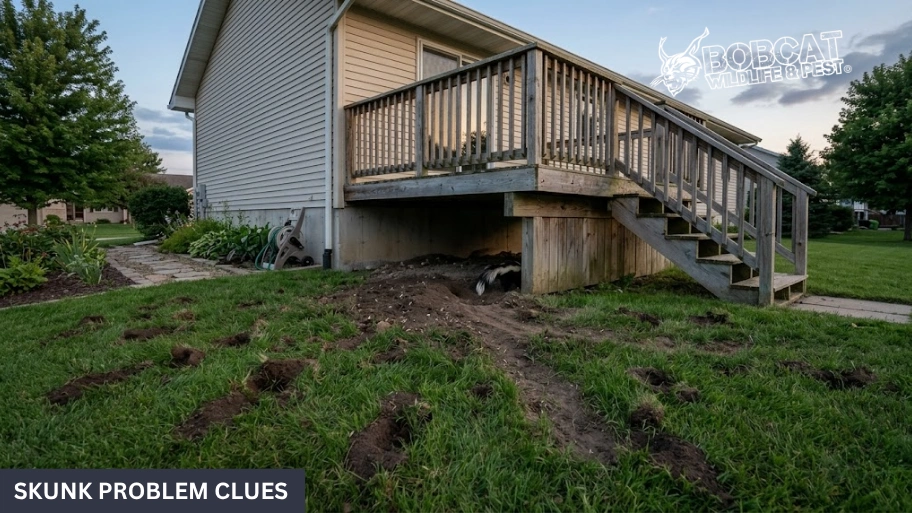
Skunks commonly den beneath decks, porches, sheds, and other structures where they can stay hidden during the day.
Common signs of a skunk den include:
According to Derek Brownmiller, Waterloo Branch Operator for Bobcat Wildlife & Pest Management, homeowners often notice these warning signs before they ever see the animal itself.
In this guide, we’ll cover how to identify a skunk den, where skunks commonly nest around Waterloo and Cedar Falls homes, and when it may be time to call a professional.
What This Guide Covers:
Why Skunks Choose Residential Properties for Their Dens
Residential properties provide many of the things skunks look for when choosing a den site.
Decks, porches, sheds, and crawl spaces offer protection from weather and predators without requiring the animal to dig a large burrow.
This is one reason skunk dens are so commonly found near homes. Areas beneath structures are often quiet, sheltered, and rarely disturbed, making them ideal places for skunks to rest during the day.
Common den locations include:
Once a skunk finds a suitable location, it may continue using the area until it is removed or disturbed.

Common Signs of a Skunk Den Around Your Property
Skunks are usually active when most homeowners are asleep, which means the signs of a den are often noticed before the animal itself.
While one sign alone does not always confirm a skunk den, several of the following signs together may indicate a skunk is living nearby.
A Strong, Recurring Skunk Odor
A lingering skunk smell is often one of the first signs homeowners notice.
While a skunk spray can create a temporary odor, a smell that repeatedly returns to the same area may indicate a skunk is denning nearby.
Pay close attention to odors around decks, porches, sheds, and crawl spaces where skunks commonly seek shelter.
Small Holes in the Lawn
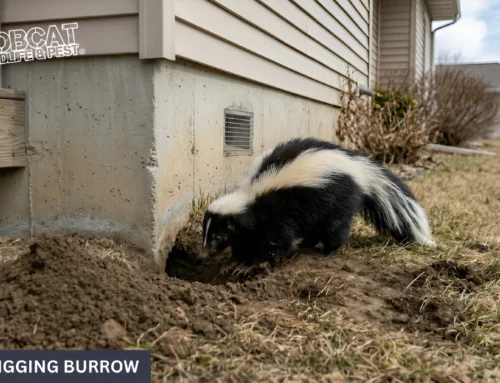
Skunks frequently dig for grubs and insects beneath the soil. Their feeding activity usually creates small, shallow holes scattered throughout the yard.
If new holes appear overnight and continue showing up in different areas of the lawn, skunks may be visiting the property regularly.
Openings Beneath Decks, Porches, or Sheds
One of the clearest signs of a skunk den is an active opening beneath a structure.
Look for disturbed soil, flattened grass, or a visible path leading to a gap beneath a deck, porch, or shed.
Skunks often take advantage of existing openings rather than creating new ones.
Repeated Activity Around Dusk
Skunks are most active during the evening hours.
Seeing a skunk once does not necessarily mean a den is nearby, but repeated sightings around the same area can suggest the animal is living close to the property.
Homeowners often notice skunks following the same routes between feeding areas and their den.
Changes Around a Structure
A skunk den can sometimes be identified by subtle changes around a structure.
Loose soil, displaced mulch, flattened vegetation, or worn pathways may indicate regular activity beneath a deck or shed.
Pets may also show unusual interest in a particular area long before homeowners realize a den is present.
What Does a Skunk Den Look Like?
A skunk den is usually a small opening beneath a structure or sheltered area.
Most entrances are only a few inches high and wide, making them easy to overlook.
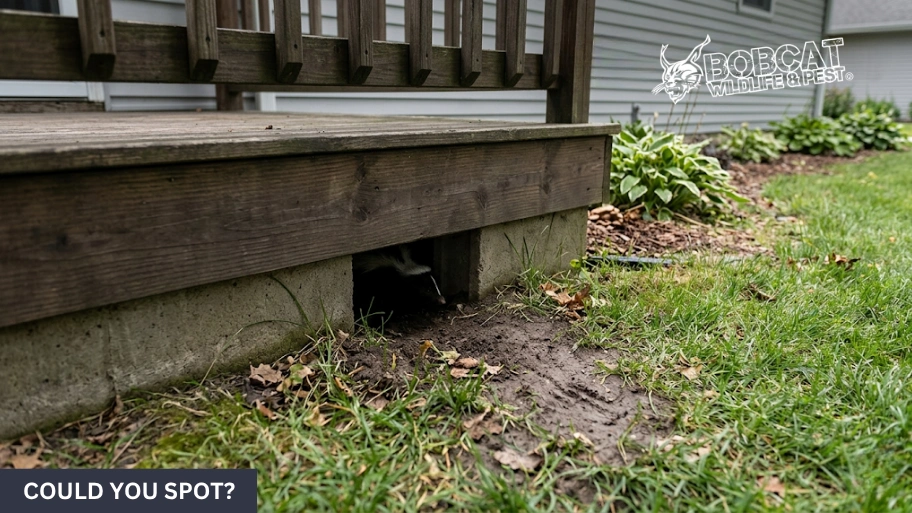
Unlike larger burrows, skunk dens often have a low, subtle appearance with little soil piled around the entrance.
In many cases, skunks use existing gaps beneath decks, porches, sheds, or foundations rather than creating a completely new opening.
Because the entrance blends into its surroundings, homeowners often walk past a skunk den without realizing it is there.
Why You Shouldn’t Ignore a Skunk Problem
A skunk living on your property is more than just a nuisance. The longer a skunk remains established around a home, the greater the chance of additional problems developing.
Potential risks include:
What starts as a single skunk can sometimes lead to larger wildlife issues if the den site is left unaddressed.
Taking action early is often the best way to prevent additional problems and reduce the likelihood of future wildlife activity around your property.
Can You Remove a Skunk Under a Deck or Shed Yourself?
In some situations, homeowners may be able to encourage a skunk to leave on its own.
However, before taking any action, it’s important to determine whether the den is currently active and whether young skunks may be present.
A few questions to consider include:
The biggest challenge is often not getting the skunk to leave. It’s making sure the problem does not return.
If the opening beneath a deck or shed remains accessible, another skunk or different animal may move into the same area later.
For homeowners who are unsure whether a den is active or how to properly secure the area afterward, professional skunk removal can help ensure the problem is handled correctly.
How Professional Skunk Removal Works
Getting rid of skunks begins by looking around the property to see where the skunk lives and if it is home.
While every situation is different, the process typically includes:
What you do depends on where the skunk home is, how the property looks, and if there are baby skunks around.
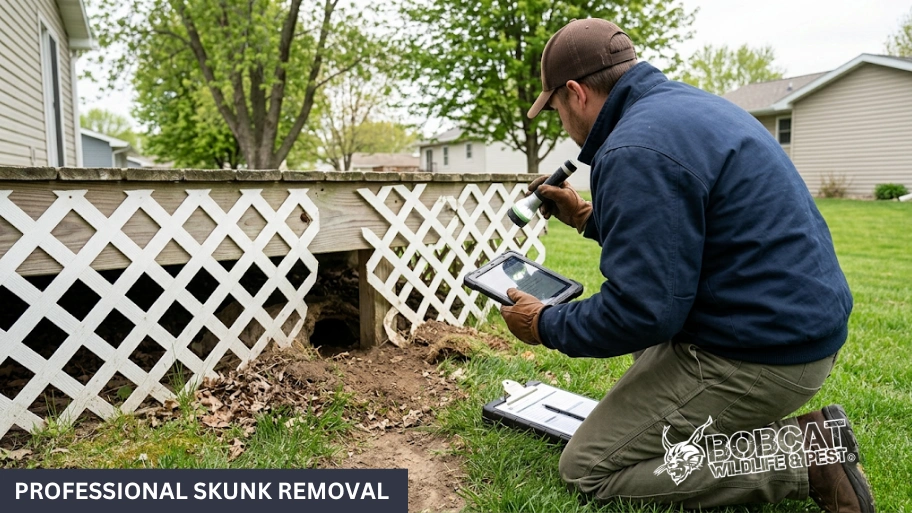
At Bobcat Wildlife & Pest Management, our team helps homeowners throughout Waterloo and Cedar Falls identify active skunk dens and safely resolve wildlife issues around the property.
How to Prevent Future Skunk Dens on Your Property
Preventing future skunk dens starts with making your property less attractive as a shelter site.
Skunks are more likely to settle in areas that provide easy access to cover and protection.
To help discourage skunks from denning near your home:
Pay special attention to areas around structures where skunks commonly seek shelter.
Small openings that seem insignificant can be large enough for a skunk to access.
Regular property maintenance and exclusion work can go a long way toward reducing the chances of future skunk activity around your home.
When to Contact a Wildlife Removal Professional
While some wildlife situations are straightforward, others can be difficult to assess without experience.
It may be time to contact a wildlife removal professional if:
Many homeowners know something is happening but aren’t sure what they’re dealing with.
Determining whether a den is active, abandoned, or being used by more than one animal can be challenging without a thorough inspection.
Bobcat Wildlife & Pest Management helps homeowners throughout Waterloo and Cedar Falls evaluate skunk activity, identify den locations, and determine the most appropriate next steps for the property.
Common Questions About Skunk Dens in Waterloo and Cedar Falls
How long will a skunk stay under a deck or shed?
A skunk may stay under a deck or shed for several weeks or even months if the location provides shelter and easy access to food.
In Waterloo and Cedar Falls, Bobcat Wildlife & Pest Management often finds that skunks remain in the same den until they are disturbed or conditions change.
The length of time can depend on:
- Available food sources nearby
- Weather conditions
- Whether the den is being used to raise young
Do skunks leave their den every night?
Yes, skunks typically leave their den after sunset to search for food. However, they do not always travel far from the den site.
Homeowners may notice:
- Activity around dusk
- Fresh digging appearing overnight
- Skunks returning to the same location before sunrise
Bobcat Wildlife & Pest Management often uses these activity patterns to help confirm whether a den is currently active.
What time of year are skunks most likely to den near homes in Iowa?
Skunks can be found near homes throughout the year, but denning activity often becomes more noticeable during spring and early summer.
This is because skunks are often looking for protected places to rest or raise their young.
Around Waterloo and Cedar Falls, homeowners frequently discover skunk activity beneath decks, porches, and sheds during these seasons.
Can skunks damage a home's foundation?
Skunks typically do not damage foundations directly, but they can take advantage of existing gaps, openings, or weak areas around a structure.
Over time, homeowners may notice:
- Soil displaced near the foundation
- Enlarged openings beneath structures
- Increased wildlife activity around the same area
Bobcat Wildlife & Pest Management recommends addressing wildlife access points early before they become larger exclusion projects.
Will a skunk den attract other wildlife?
Yes, an abandoned skunk den or accessible shelter area can sometimes attract other wildlife. Animals are often drawn to locations that already provide protection from weather and predators.
After a skunk leaves, common replacement animals may include:
- Opossums
- Raccoons
- Feral cats
- Other small mammals
This is one reason Bobcat Wildlife & Pest Management helps homeowners throughout Waterloo and Cedar Falls identify and secure wildlife entry points after removal.
Are skunks dangerous to dogs and outdoor pets?
Skunks can pose a risk to dogs and other outdoor pets, especially when they feel cornered or threatened.
The most common issue is spraying, which often occurs when a curious pet approaches too closely.
In addition to spraying, skunks are considered a rabies-vector species.
Bobcat Wildlife & Pest Management recommends keeping pets away from known den sites and avoiding direct contact with wildlife around Waterloo and Cedar Falls properties.
How can I tell if a skunk den is active or abandoned?
An active skunk den will usually show signs of recent use. Homeowners may notice fresh tracks, disturbed soil, new digging activity, or regular odors near the entrance.
An abandoned den typically lacks signs of recent activity. However, it can be difficult to confirm whether a den is truly vacant without a proper inspection.
Bobcat Wildlife & Pest Management often helps homeowners determine whether a suspected den is currently being used.
Do skunks use the same den year after year?
Skunks do not always return to the same den every year, but they may reuse a location if it remains safe and accessible.
Properties with unsealed openings beneath decks, sheds, and porches are more likely to experience recurring wildlife activity.
This is one reason exclusion work is often recommended after a skunk problem has been resolved.
Can skunks have babies under a deck or shed?
Yes, female skunks sometimes choose areas beneath decks, porches, and sheds as places to raise their young. These locations provide shelter from weather and predators.
If young skunks are present, removal becomes more complicated because separating a mother from her offspring can create additional wildlife issues.
Bobcat Wildlife & Pest Management takes den occupancy into account when evaluating skunk problems in the Waterloo area.
When should I call a professional for skunk removal?
You should consider contacting a professional if you notice repeated skunk activity, a suspected den beneath a structure, strong recurring odors, or concerns about pets encountering wildlife.
Early intervention is often simpler than waiting for the problem to grow.
Bobcat Wildlife & Pest Management helps homeowners throughout Waterloo and Cedar Falls identify active skunk dens and determine the most appropriate solution for the situation.

About the Author
Derek M. Brownmiller is the Waterloo Branch Operator for Bobcat Wildlife & Pest Management. A U.S. Army veteran, he is committed to helping homeowners throughout Waterloo and Cedar Falls address wildlife and pest issues with safe, effective solutions.
In addition to serving local customers, Derek is active in his community and enjoys fitness, sports, and spending time with his dog. At Bobcat, he focuses on helping protect homes and businesses while providing practical, long-term wildlife management solutions.